

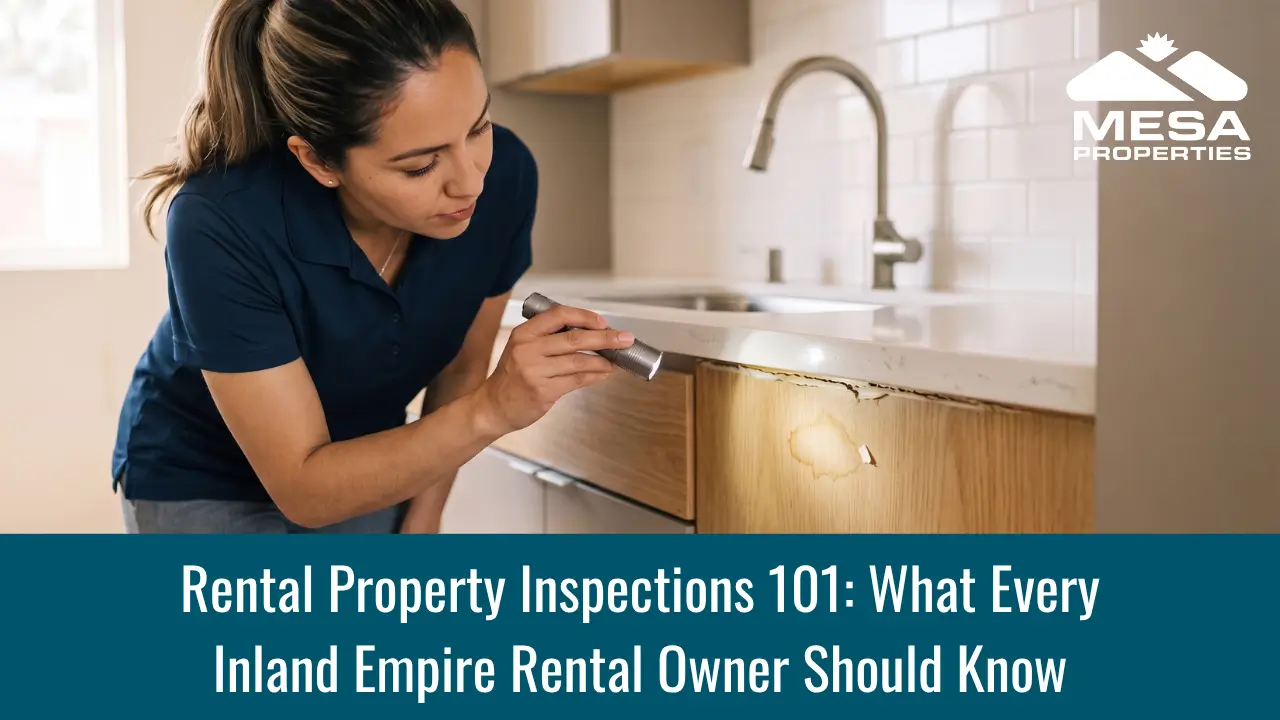
A leaky pipe under a kitchen sink rarely looks urgent. Left alone for a few months, though, it can warp cabinets, feed mold, and turn a $150 fix into a $10,000 repair. That's the kind of slow-moving damage a solid inspection routine is designed to catch, usually long before an owner would ever notice it on their own.
For Inland Empire rental owners, inspections aren't a way of hovering over tenants. Done right, they're a scheduled habit that protects the property's value, keeps everyone living there safe, and saves real money down the road. This article walks through the different types of inspections, what a thorough one actually includes, how often they should happen, and why tenants tend to benefit from them just as much as owners do.
Key Takeaways
Regular inspections catch small issues while they're still inexpensive to fix.
Different inspection types serve different purposes, from move-in walkthroughs to seasonal checkups.
A thorough inspection covers safety, system function, lease compliance, and documentation.
Clear communication is what turns an inspection into a trust-building visit instead of a tenant complaint.
Why a Regular Inspection Schedule Pays Off
Inspections do more than check boxes on a to-do list. Here's where the real value shows up over time.
Small Problems Cost Less When Caught Early
A dripping faucet, a flickering light, a hairline crack in the drywall. Each one looks minor on its own. But an owner who only sees the property once a year has no way of knowing which small issue has been sitting there for months already. Regular inspections give owners a chance to catch these things while a quick fix is still on the table.
Property Value Holds Up Better
Rental properties absorb a lot of daily wear, and a lot of it happens quietly. A loose cabinet hinge here, a worn weather seal there. None of it shows up on a rent statement, but it adds up. Routine inspections help owners stay ahead of that wear instead of discovering it all at once during a move-out, which is exactly when it's most expensive to address.
Fewer Safety and Liability Surprises
Faulty wiring, a broken stair railing, a smoke detector that quietly stopped working months ago. These aren't just maintenance items, they're liability exposure. An inspection is often the only thing standing between a hazard going unnoticed and it turning into an injury or a legal claim.
The Different Types of Rental Inspections
Not every inspection serves the same purpose, and owners get the most value when they understand how each one fits into the bigger picture.
Move-in inspections: Document the property's condition before a tenant moves in. This protects both the owner and tenant if there's a dispute over damage later.
Move-out inspections: Compare the property's condition to the move-in report. This helps determine what, if anything, should be deducted from the security deposit.
Routine or seasonal inspections: Scheduled checkups, usually every six months, that catch maintenance issues tenants might not report.
Drive-by inspections: Quick, informal check-ins from outside the property. These help spot exterior issues like unauthorized pets, unapproved changes, or landscaping neglect.
Together, these four types build a fuller picture of a property's condition than any single walkthrough ever could. If you're not sure which combination makes sense for your rental, our team can help you build out a periodic inspection plan tailored to the property's age, location, and lease terms.
What Belongs in a Thorough Inspection
A good inspection goes well past a quick walkthrough with a clipboard. At minimum, it should cover the roof, foundation, windows, and doors alongside the smoke detectors, carbon monoxide detectors, and fire extinguishers, since these are the items most likely to become safety issues if ignored.
HVAC systems, water heaters, plumbing, and major appliances all need to be tested for actual function, not just visually checked. The inspection is also a natural point to look for lease violations, whether that's an unapproved pet, an extra occupant, or unauthorized subletting. And every visit should end with photos and detailed notes, since that documentation protects both the owner and the tenant if a disagreement arises months later.
How Often Should Rental Properties Be Inspected?
Most property managers recommend inspecting a rental unit every twelve months. That interval gives owners enough time to catch developing issues without the visits feeling intrusive to whoever's living there.
Timing isn't identical for every property, though. Older buildings or units with a history of maintenance problems often benefit from more frequent visits, while a newer property in good condition might only need one checkup a year. Lease terms also factor in, since many leases specify how often inspections can occur and how much notice is required.
Local landlord-tenant law adds another layer on top of that. Some states set strict limits on entry frequency or require specific notice windows before a visit can happen. The U.S. Department of Housing and Urban Development offers general guidance on tenant rights and housing standards, but the specific rules still vary by area, so it's worth confirming local requirements before scheduling anything and building the inspection cadence directly into the lease from the start.
Why Tenants Benefit From Inspections Too
Inspections carry a bit of a reputation problem, but tenants come out ahead just as often as owners do when they're handled well.
Maintenance issues are caught and scheduled for repair before they become bigger problems. Clear documentation protects tenants from unfair deposit deductions while giving owners solid proof if damage genuinely occurred. A well-maintained unit is simply a better place to live, which tends to make tenants happier and more likely to renew. And the visit itself creates a natural window for a tenant to flag something they might not otherwise call in, like a slow leak or a lock that's starting to stick.
When an inspection comes with clear notice and a respectful process, tenants tend to read it as their home being cared for rather than being checked up on. That shift in perception matters more than most owners expect.
Common Inspection Questions From Owners
How much notice do I need to give before an inspection?
California requires 24 hours of written notice before entering a rental unit.
What happens if an inspection turns up a problem?
Most issues get scheduled for repair right away through our maintenance coordination process. Larger structural concerns may need a licensed contractor to take a closer look before any work begins.
Can a tenant refuse an inspection?
A tenant can typically ask to reschedule, but can't refuse an inspection outright once proper notice has been given and the request itself is reasonable. Lease terms and local law both play a role here, so it's worth reviewing the specifics.
A Well-Inspected Property Is a Better-Protected One
None of this requires much to get started. A consistent schedule, clear communication, and a habit of documenting what you find go a long way toward avoiding the expensive surprises that catch owners off guard later. Owners who treat inspections as a routine part of ownership, rather than something to squeeze in when there's time, tend to see fewer disputes, lower repair bills, and tenants who stick around longer.
If you'd rather not manage that schedule yourself, we handle the entire process as part of our property management services, from setting the right inspection cadence to following up on anything it turns up. Reach out today, and we'll help you put a routine in place that fits your property.