

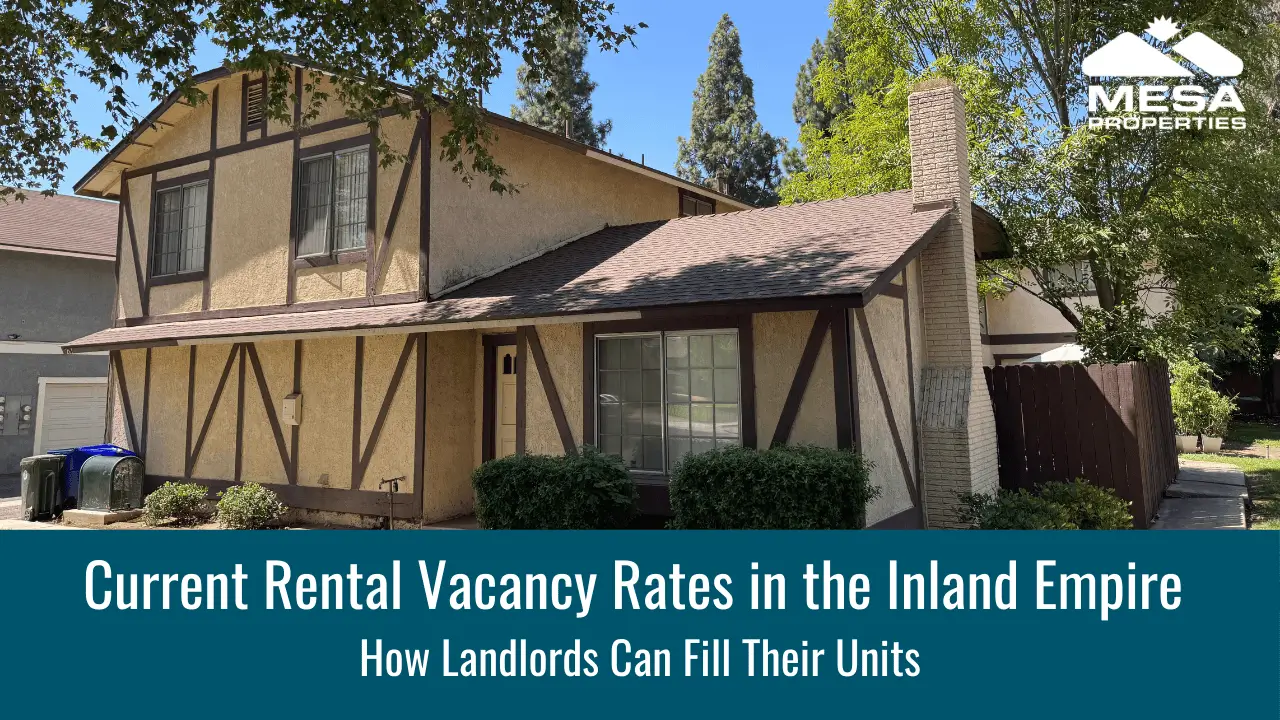
The rental market in Southern California continues to evolve, and landlords across Riverside and San Bernardino counties are closely watching the rental vacancy rates in the Inland Empire. After years of historic demand and rapid rent growth, the market has shifted into a more stabilized (yet still competitive) environment.
As of Q1 2025, the Inland Empire’s multifamily vacancy rate sits at 4.6%. While this is about 80 basis points above the five-year average, it still reflects a relatively tight rental market. Demand remains strong, fueled by renters relocating from higher-cost coastal counties like Los Angeles and Orange County.
For landlords in the Inland Empire and High Desert, the message is clear: opportunities remain strong, but strategy matters more than ever.
Key Takeaways
Vacancy remains tight at 4.6%, signaling continued demand despite new housing supply.
Coastal migration continues to drive rental demand, particularly in high-growth areas like North Ontario and Ontario Ranch.
Rent grew 3.5% year-over-year, indicating steady appreciation.
Competitive pricing and incentives can significantly reduce vacancy time.
Strategic tenant screening and flexible lease terms help secure long-term stability.
Understanding the Current Rental Landscape (2025–2026)
Vacancy Rates: Slightly Looser, Still Competitive
The current rental vacancy rates in the Inland Empire reflect a modest shift toward balance. At 4.6% in Q1 2025, vacancy is slightly higher than the five-year average, but far from oversupplied.
This means:
Properties are still leasing.
Demand remains steady.
Overpricing can quickly lead to extended vacancy.
Compared to 2021’s historically tight conditions, the market has normalized. Instead of dramatic rent spikes, landlords should now anticipate more sustainable annual growth in the 2–3% range.
Demand Drivers: Coastal Migration & Regional Growth
One of the strongest forces supporting Inland Empire rentals is affordability relative to coastal markets. Renters priced out of LA and Orange County continue relocating inland for:
Larger living spaces
Lower monthly rent
Access to employment corridors
Growing community infrastructure
Rental Growth: Steady and Sustainable
Over the past 12 months, rent increased by approximately 3.5%. While that’s lower than pandemic-era spikes, it reflects healthy and sustainable growth.
One crucial thing to note, however, is that while rent is up overall, the reality for many markets across the region has been rent rates that have remained flat or even down by a small margin. Many owners are still expecting a COVID-boom era rates even almost 6 years later, and so overpricing is common right now.
This isn’t a boom-and-bust environment. It’s a normalized market that rewards professional management and data-driven pricing.
Industrial vs. Residential Market
Industrial vacancy in the region rose to 8.4% in Q4 2025, but this applies to warehouses and logistics space, not residential rentals. While industrial softness can signal broader economic shifts, residential demand remains comparatively tight.
For landlords, the residential sector continues to outperform many other real estate segments in the region.
How Landlords Can Fill Units Faster in Today’s Market
Even in a 4.6% vacancy market, not all properties lease at the same pace. The difference often comes down to strategy.
1. Price Competitively — Not Optimistically
One of the biggest mistakes landlords make is pricing based on peak-market rents rather than current conditions.
In today’s Inland Empire rental environment:
Overpricing can result in 60–90 days of vacancy.
A slightly lower, market-aligned rent often fills a unit within weeks.
Carrying costs quickly outweigh modest rent reductions.
Market research is essential. Review comparable properties, analyze days-on-market trends, and adjust accordingly. At Mesa Properties, we rely on real-time rental data to help owners position their properties correctly from day one.
2. Offer Smart Incentives
In a stabilized market, incentives can make all the difference for multifamily properties. While single-family is typically better to lease like normal, incentives can help fill a multifamily property easier.
Effective options include:
First month’s rent discount
Reduced security deposit (where appropriate)
Covered parking
Waived application fees
Minor upgrades (new appliances or fresh paint)
It’s often more cost-effective to offer a small concession than to leave a unit vacant for three months. Turnover costs (including utilities, marketing, and lost rent) add up quickly.
3. Enhance Curb Appeal and Property Presentation
Today’s renters shop online first. If your listing doesn’t stand out visually, you’ll lose inquiries.
Focus on:
Professional-quality photos
Clean, bright interiors
Updated lighting
Fresh landscaping
Neutral paint tones
Even small upgrades can dramatically improve perceived value. High-quality marketing shortens vacancy time and attracts stronger applicants.
4. Streamline Your Marketing Strategy
Online visibility is critical. Listings should appear on:
Major rental platforms
Local listing services
Your property management website
Social media channels
High-resolution photos and compelling descriptions increase click-through rates and showing requests.
The faster you generate qualified traffic, the faster you fill the unit.
5. Implement Thorough, Consistent Tenant Screening
While filling a vacancy quickly is important, filling it with the right tenant is critical.
Targeted screening should include:
Income verification
Employment history
Credit evaluation
Rental history review
Background checks
The goal is long-term stability. Quality tenants reduce turnover, maintenance issues, and collection concerns.
Considerations for Inland Empire Landlords Moving Forward
Prepare for Moderate Growth — Not Rapid Surges
The days of double-digit rent growth are behind us. Market indicators suggest landlords should anticipate 2–3% annual increases in the near term.
This means:
Budget conservatively
Plan maintenance proactively
Prioritize tenant retention
A stable tenant paying consistent rent is more valuable than chasing aggressive increases that lead to turnover.
Retention Is Often Cheaper Than Vacancy
If a strong tenant’s lease is ending, consider:
Modest renewal incentives
Small or no rent adjustments instead of large hikes
Replacing a tenant can cost thousands in turnover expenses. In many cases, a renewal incentive saves money long term.
Frequently Asked Questions
1. Is 4.6% vacancy considered high in the Inland Empire?
No. A 4.6% vacancy rate is still considered relatively tight. While slightly higher than the five-year average, it indicates continued demand and stable absorption.
2. Will rents continue to rise in 2026?
Current projections suggest moderate rent growth of approximately 2–3% annually. While not as aggressive as previous years, this reflects a healthy and sustainable market.
3. Should landlords lower rent immediately if a unit doesn’t lease?
Not necessarily immediately, but if showings are low or applications aren’t coming in within the first few weeks, pricing may need adjustment. It’s typically more affordable to slightly reduce rent than to carry an extended vacancy.
Partner With a Local Expert to Maximize Performance
Understanding the rental vacancy rates in the Inland Empire is only part of the equation. Success today requires strategic pricing, professional marketing, careful screening, and proactive management.
At Mesa Properties, we specialize in helping landlords throughout the Inland Empire and High Desert maximize occupancy while protecting long-term asset value. Our data-driven approach ensures your rental is priced correctly, marketed effectively, and managed with precision.
If you’re ready to reduce vacancy, attract qualified tenants, and strengthen your rental income, connect with our team today.
Contact us today to learn how we can help you succeed in today’s market.