
Owners who move up the Cajon Pass from the valley are often surprised the first time they scrape frost off a windshield in Hesperia. At 2,875 feet, Victorville sits high enough that winter nights regularly drop below freezing, and the occasional storm even leaves a light layer of snow. For rental owners, cold nights, dry air, and gusty winds add up to a set of problems that rarely show up on a property in Rancho Cucamonga or Ontario.
Nearly all of them cost far less to prevent than to repair. Here's what we look at on High Desert rentals before the first hard freeze, and what owners can do now while the weather is still mild.
Key Takeaways
- Exposed pipes, hose bibs, and irrigation backflow assemblies are the most common freeze casualties on High Desert rentals.
- California law treats working heat as a basic habitability requirement, so furnace service belongs on your fall calendar.
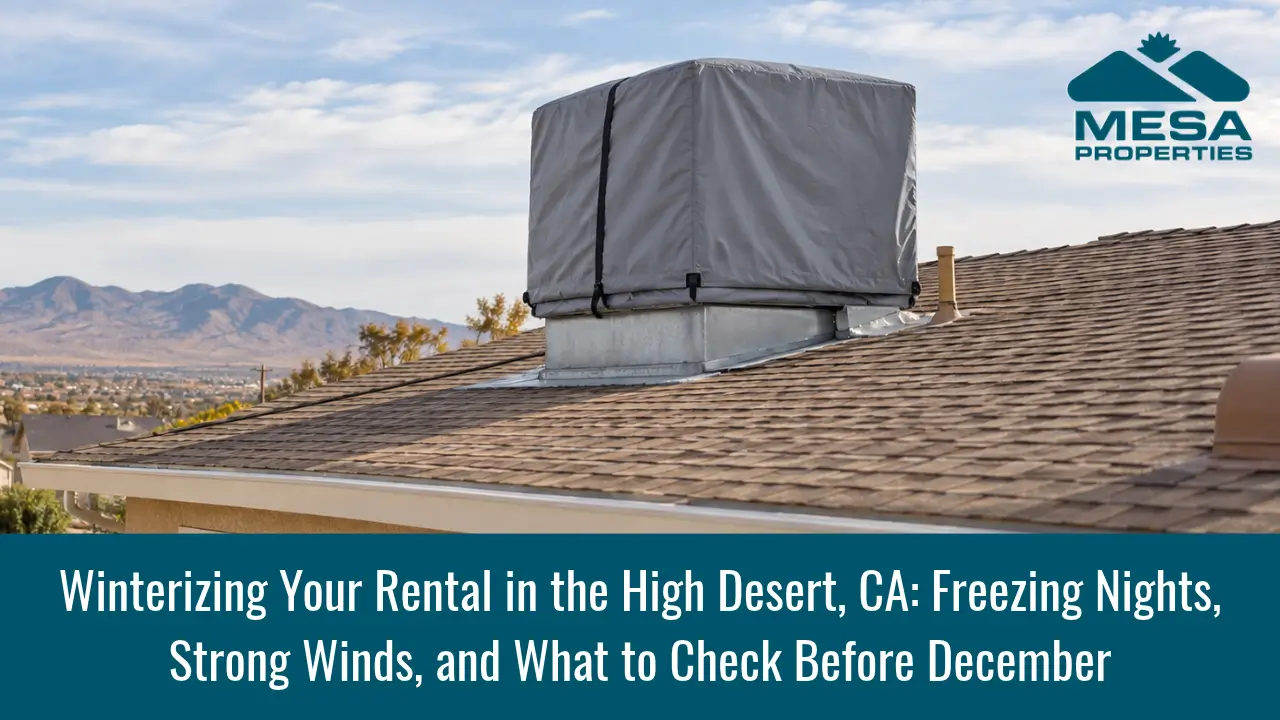
- Evaporative coolers should be drained and covered before freezing weather to prevent cracked lines and cold drafts.
- After a major wind event, a quick exterior walk can catch roof and fence damage before the next rain turns it into a bigger repair.
- Vacant homes need the heat left on and regular check-ins, since a burst pipe can run for days before anyone notices.
Why High Desert Winters Catch Owners Off Guard
Average January lows in Victorville have landed in the low to mid 30s for decades, according to NOAA records compiled by Extreme Weather Watch. An average in the 30s means plenty of individual nights well below freezing. Afternoons often climb back into the 50s or 60s, and that wide daily swing makes the cold easy to underestimate. A long night in the 20s can still freeze and split an exposed line, no matter how pleasant the afternoon felt.
Wind is the other half of the picture. Winter storms and offshore patterns push strong gusts across the Victor Valley, and open stretches of Adelanto, Oak Hills, and Apple Valley take the brunt of it. Fence panels, shingles, and patio covers are usually the first things to go.
Protect Plumbing, Hose Bibs, and Irrigation Lines
Outdoor plumbing is where most freeze damage starts. Before the first cold snap, we recommend:
- Insulating exposed pipes in garages, under raised foundations, and along exterior walls with foam sleeves.
- Disconnecting garden hoses, which trap water in the spigot, and adding insulated covers to every hose bib.
- Wrapping the irrigation backflow preventer, the brass assembly that sits above ground and cracks easily when water inside it freezes.
- Shutting down drip and sprinkler zones that won't be needed until spring.
Garage water heaters deserve a look too, since their supply lines are often exposed. Make sure your tenant knows where the main water shutoff is. Someone who can close that valve within minutes of a burst keeps the damage to one room instead of the whole floor.
Treat Heat as a Habitability Issue
Under California Civil Code Section 1941.1, heating facilities in good working order are one of the baseline conditions for a habitable rental. A dead furnace on a 30-degree night is an urgent repair, not something that waits for a convenient week.
Have a licensed HVAC technician service gas furnaces and heat pumps each fall, replace filters, and check for cracked heat exchangers. Confirm the carbon monoxide detectors work during the same visit, since California requires them in rentals with gas appliances or an attached garage. A fall service call also fits neatly into a regular inspection routine, so small problems surface before a tenant has to call about them.
Shut Down the Swamp Cooler Before It Freezes
Evaporative coolers are everywhere in the High Desert, and they need their own winter routine. Water left in the pan, pump, or supply line can freeze and crack those parts. Turn off the cooler's water supply, drain the pan, unplug the pump, and cover the unit or seal the duct opening.
Skipping the cover is a common mistake. Cold air drops straight down the duct into the living space, which raises heating bills and leads to drafty-house complaints all winter. That same cooler becomes essential again in July, and our article on California cooling ordinances explains why keeping it in good shape matters year-round.
Check the Exterior After Wind Events
After a big wind day, walk the property or have someone do it for you. Look for loose or missing shingles, lifted flashing, leaning fence sections, damaged gates and patio covers, and tree limbs hanging over the roof. A lifted shingle in December becomes a ceiling stain the next time it rains, and a downed fence panel turns into a safety issue fast for tenants with dogs or a pool.
Give Vacant Rentals Extra Attention
With nobody living there, an empty house can hide a burst pipe for days. Keep the thermostat at 55 degrees or higher, shut off water to fixtures that won't be used, and schedule regular walk-throughs until a tenant moves in. Winter vacancy is also a good window to finish rent-ready work, so the home shows well and leases quickly.
For occupied homes, a short reminder to tenants in November helps too. Ask them to keep the heat on while traveling, let faucets drip on the coldest nights, and report heating problems right away.
Frequently Asked Questions About Winterizing High Desert Rentals
- Exposed pipes are at risk whenever temperatures stay below freezing for several hours, and the danger climbs on nights in the low 20s. Lines in garages, crawl spaces, and exterior walls tend to freeze first.
- The owner is responsible for keeping heating and plumbing in working order. Tenants are expected to use reasonable care, like keeping the heat on and reporting problems quickly. Putting those expectations in the lease and a seasonal reminder heads off disputes later.
- For a home that will sit empty for several weeks, shutting off the main and draining the lines is the safest choice. If the home is being shown regularly, keep the heat on and schedule frequent check-ins instead.
Fall Prep That Keeps High Desert Rentals Out of Trouble
Most winter damage in Victorville, Hesperia, and Apple Valley traces back to a short list of causes: a frozen hose bib, a furnace nobody serviced, a swamp cooler left full of water, or a vacant home that went unchecked. An afternoon of prep in November takes care of nearly all of it.
Ready for the first hard freeze?
Our Victorville team handles seasonal upkeep for owners across the Victor Valley, from furnace service to after-storm property checks. If you'd like help getting your rental ready for the cold months, give our High Desert office a call.
Learn how our maintenance services work